Description
Weak, shared, or reused passwords remain one of the most common contributing factors in healthcare data breaches. Meeting HIPAA password requirements with a documented, enforceable policy creates a record that your organization has addressed this risk.
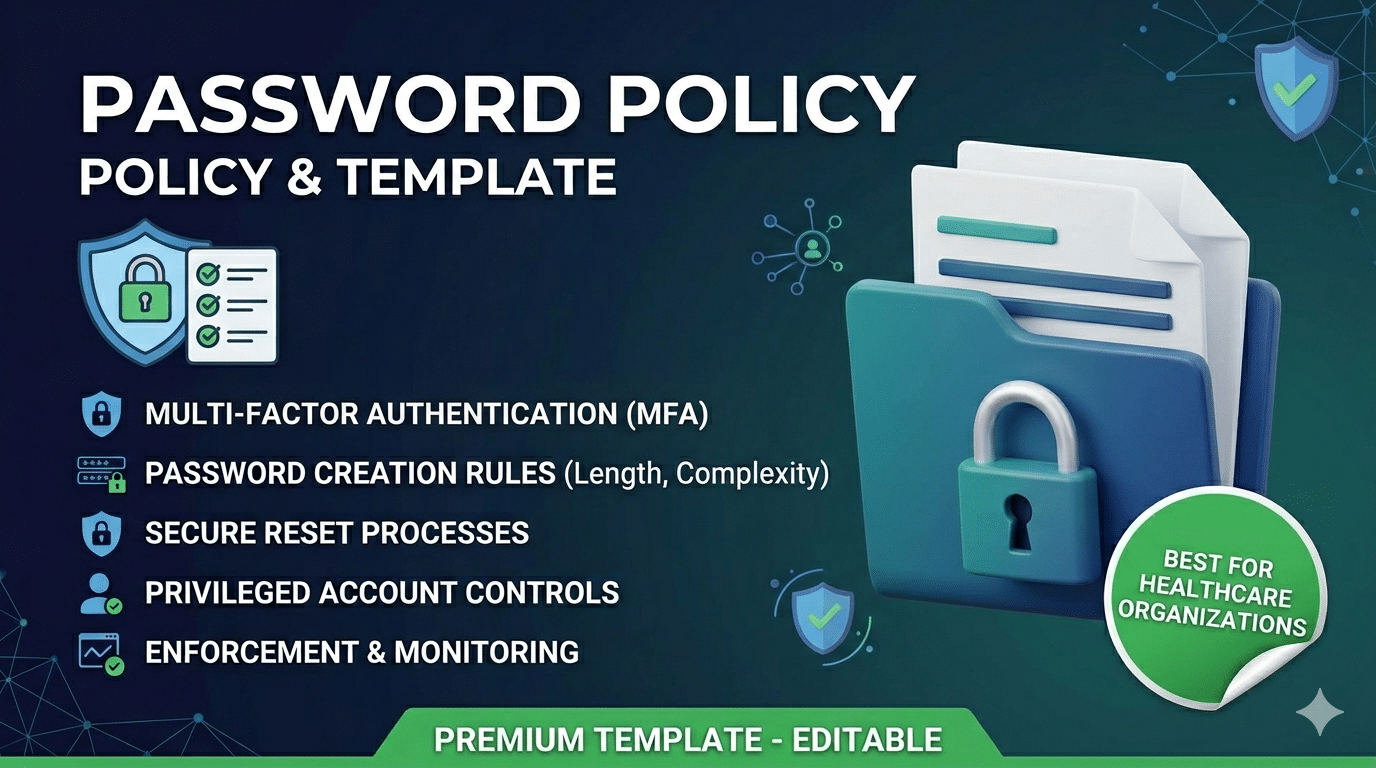
The HIPAA Password Policy Template covers authentication credential requirements for systems that access, store, or transmit electronic protected health information, aligned to the Access Control and Person or Entity Authentication standards at 45 CFR 164.312(a) and (d).
Meeting HIPAA password requirements starts with understanding what the rule actually mandates. 45 CFR 164.312(d) requires “procedures for verifying that a person or entity seeking access to electronic protected health information is the one claimed,” but it does not specify technical parameters like minimum length or rotation intervals. In practice, most organizations align their password requirements with the NIST SP 800-63B digital identity guidelines, which favor longer passphrases and screening against known-breached password lists over frequent forced rotation. This template’s complexity, multi-factor authentication, and password management provisions are built around that current best-practice approach.
How Often Should Passwords Be Changed Under HIPAA?
HIPAA itself does not set a fixed password rotation schedule, and forced periodic changes alone are no longer considered a best practice. The current NIST-aligned approach favors long, unique passwords combined with multi-factor authentication and breached-password screening, with forced rotation reserved for suspected compromise, shared credentials, or workforce turnover. This template supports both options: a rotation-based schedule for organizations that require one, and an event-driven, MFA-supported approach for organizations aligning with current guidance. Whichever standard you adopt, documenting it consistently, and applying it the same way across all systems, is what auditors and your risk analysis need to see.
This is a foundational security policy that every covered entity and business associate needs. It takes relatively little time to implement but directly reduces one of the most persistent breach risks in healthcare.
What This Template Covers
- Minimum password complexity and length requirements
- Password expiration and rotation standards
- Password reuse restrictions
- Multi-factor authentication requirements and applicability
- Prohibited practices covering sharing, writing down, and cross-system reuse
- Password manager guidance and approved tool references
- Temporary and default password requirements for new accounts and systems
- Workforce training and acknowledgment obligations
- Violation and sanction references
Part of a Complete Security Rule Program
A password policy is one piece of a larger technical safeguards program. Pair this template with your Access Control Policy to document unique user IDs, emergency access, and automatic logoff, and your Workstation Security Policy to cover the physical and device-level safeguards for the workstations where these passwords are entered.
Common Password Policy Mistakes to Avoid
Many HIPAA password requirements policies fail audits not because they are missing, but because they are inconsistent with actual practice. Common gaps include mandating 90-day rotation without accounting for current NIST guidance, no documented multi-factor authentication requirement for remote or cloud access, shared service accounts with no individual accountability, and no defined process for disabling credentials promptly when a workforce member is terminated. This template addresses each of these gaps directly, with bracketed placeholders so you can adopt the specific complexity, rotation, and MFA standards that match your organization’s risk analysis.
Who This Is For
Security officers, IT administrators, and compliance teams at covered entities and business associates of all sizes who need a documented, enforceable password policy as part of their HIPAA Security Rule implementation. This includes multi-location practices, telehealth providers, and organizations preparing for an OCR audit, a business associate assessment, or a vendor security review that need to show a consistent, adopted standard rather than an informal or undocumented practice.
Delivered as an editable Microsoft Word (.docx) file. Available immediately after purchase.